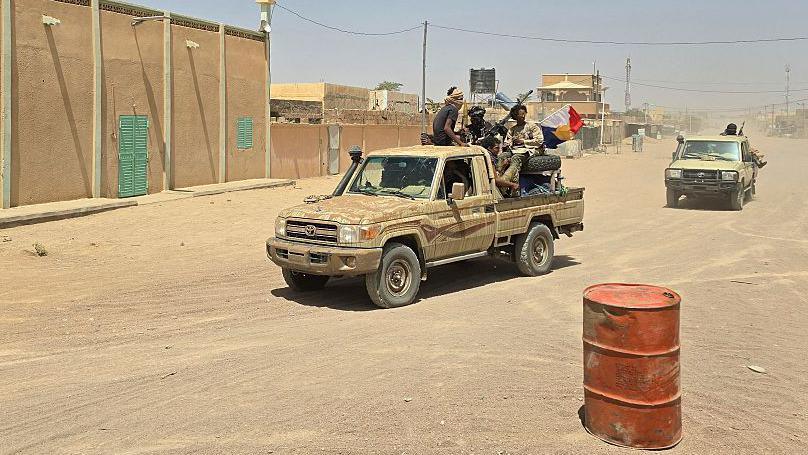
Mali is unraveling. In the vast, arid reaches of the northern Kidal region, where Tuareg rebels, Islamist militants, and foreign military forces have long clashed, a new shift is unfolding: Russia’s Africa Corps has confirmed its withdrawal from the strategic desert stronghold. The move follows a surge in coordinated militant attacks across the region, raising urgent questions about the future of counterterrorism operations, the Malian junta’s fragile hold on power, and Moscow’s long-term strategy in Africa’s Sahel.
This isn’t a routine troop rotation. It’s a tactical retreat with strategic consequences — one that signals both the limits of Russian military influence and the intensifying volatility of northern Mali.
The Kidal Conflict: A Flashpoint Rekindled
Kidal has never been fully under Malian government control. Its rugged terrain, ethnic tensions, and history of Tuareg uprisings have made it a sanctuary for armed groups. Since the 2012 rebellion and the French-led intervention in 2013, Kidal has remained a contested zone.
In recent months, attacks have surged. In late June, a complex assault on a Malian military base near Kidal — involving suicide bombers and ambush units — killed over 40 soldiers. Days later, a convoy carrying Russian personnel was struck by an IED, leading to casualties. These weren’t isolated incidents. They were part of a broader offensive by Islamist coalitions, including affiliates of al-Qaeda and the Islamic State in the Greater Sahara (ISGS), testing the resilience of Malian and foreign forces.
The Africa Corps' presence in Kidal was meant to stabilize the region. But stabilization has proven elusive. Instead, their footprint has become a liability — both physically and politically.
Who Is Russia’s Africa Corps — and Why Were They in Kidal?
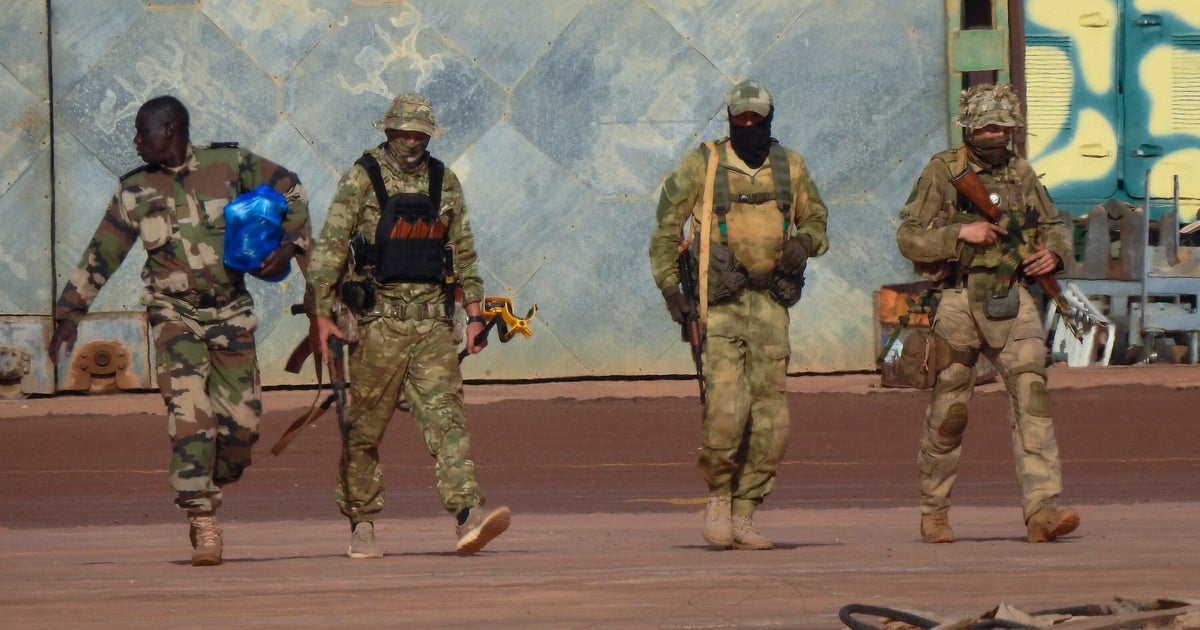
Russia’s Africa Corps is the semi-official military unit deployed to sub-Saharan Africa under Moscow’s growing hybrid warfare model. While not officially part of the Russian Armed Forces, it operates with direct Kremlin backing and often leverages former Wagner Group personnel — the same network that gained notoriety in Ukraine, Libya, and the Central African Republic.
The unit arrived in Mali in 2022 after the Malian junta severed ties with France and expelled French counterterrorism forces. Russian trainers and combat troops were embedded with Malian units to provide tactical support, intelligence, and direct intervention in hot zones — chief among them, Kidal.
Their mission was twofold: - Degrade jihadist networks operating in northern Mali. - Expand Russian geopolitical influence in a region long dominated by Western powers.
But reality has diverged sharply from intent.
Why the Withdrawal Now? The Real Triggers
The Africa Corps' departure from Kidal wasn’t voluntary. It was forced by a combination of military, logistical, and political pressures:
1. Escalated Militant Tactics Local insurgent groups have adapted. They now employ drone surveillance, coordinated night raids, and decentralized cell structures — tactics that neutralize the Africa Corps’ conventional edge. In Kidal, where forces were isolated and resupply lines stretched dangerously thin, these adaptations proved deadly.
2. Logistical Breakdown The Kidal base relied on air support and overland convoys from Gao and Timbuktu. Both routes have become increasingly hazardous due to IEDs and ambushes. At least three supply convoys were destroyed in May and June alone. Without reliable logistics, sustained presence became untenable.
3. Growing Local Resistance Despite Russian claims of neutrality, their close ties to the Malian army — accused of human rights abuses against Tuareg civilians — have fueled resentment. In Kidal, the Africa Corps was seen less as peacekeepers and more as enforcers of a repressive regime. This eroded local cooperation, cutting off a crucial intelligence stream.
4. Strategic Reassessment in Moscow
With Ukraine still draining Russian military resources, Moscow is recalibrating its foreign deployments. The Africa Corps’ failure to decisively defeat militants in Kidal — coupled with rising casualties — has prompted a reassessment. The withdrawal signals a pivot toward symbolic, less exposed positions in central Mali.
What This Means for Mali’s Security Landscape
The vacuum left by the Africa Corps’ exit is already being filled — but not by stability.
- Jihadist groups are advancing. Since the withdrawal confirmation, ISGS and JNIM (al-Qaeda affiliate) have claimed control over smaller outposts near the Algerian border. These are not major cities, but strategic footholds that allow recruitment, smuggling, and planning.
- Malian forces are overstretched. The Malian army, already struggling with low morale and outdated equipment, now faces a front line with no reliable foreign backup. Their ability to hold territory — let alone reclaim it — is in serious doubt.
- Civilian populations are at risk. In prior withdrawals (such as the French pullout in 2022), civilians caught between forces often faced reprisals, displacement, or forced conscription. Aid workers report renewed fear in Kidal’s towns, with families fleeing toward Niger and Algeria.
This isn’t just a military setback. It’s a collapse of deterrence.
Russia’s Fading Influence in the Sahel
The Kidal withdrawal exposes a deeper truth: Russia’s model of influence in Africa is showing cracks.
Unlike the U.S. or France, which invested in long-term training programs and institutional development, Russia’s approach is transactional: - Military support in exchange for mining rights. - Security guarantees backed by short-term deployments. - Propaganda victories over sustainable outcomes.
In Mali, this worked — until it didn’t.
Without boots on the ground in contested zones, Russia loses leverage. The junta in Bamako may continue rhetoric praising Moscow, but on the battlefield, results matter more than speeches. If the Africa Corps cannot protect key regions, why keep them?
Moreover, regional actors are watching closely. Niger and Burkina Faso — both under military rule and formerly French allies — are now weighing their own partnerships with Moscow. The Kidal failure may make them hesitate.
The Regional Domino Effect: What Other Countries Should Watch
The Sahel doesn’t respect borders. Instability in northern Mali spills into neighboring countries:
| Country | Risk Level | Key Concerns |
|---|---|---|
| Niger | High | ISGS movement across border; threat to uranium sites |
| Algeria | Medium | Spillover near Tamanrasset; refugee influx |
| Burkina Faso | High | Cross-border attacks from Mali-based cells |
| Mauritania | Low-Medium | Potential for sleeper cells in east |
The Africa Corps’ retreat from Kidal doesn’t isolate the problem — it exports it. As militants regroup in ungoverned spaces, attacks will follow supply chains, ethnic ties, and smuggling routes into neighboring states.
This is already happening. In early July, a village in eastern Burkina Faso was attacked by gunmen believed to have crossed from Mali. The modus operandi matched recent Kidal assaults.
What Comes Next? Scenarios for Northern Mali
The future of Kidal and northern Mali hinges on three possible paths:
1. Jihadist Consolidation (Most Likely) Without sustained military pressure, extremist groups will strengthen their hold. Kidal could become a semi-autonomous zone under militant control — similar to parts of southern Somalia or northern Syria.
2. Renewed Local Rebellion Tuareg factions, historically at odds with both jihadists and the Malian state, may rearm and reassert autonomy. This could lead to a three-way war: Malian army vs. jihadists vs. separatist militias.
3. Regional Intervention Force ECOWAS or the G5 Sahel could attempt a multinational deployment. But given the lack of funding, political will, and past failures, this remains unlikely in the near term.
None of these scenarios include a Russian return to Kidal. That door appears closed — at least for now.
The Human Cost: Beyond Geopolitics
Behind every headline about troop movements and militant gains are people. In Kidal, families are making impossible choices: stay and risk violence, or flee into overcrowded refugee camps with little food or medical care.
Humanitarian access has deteriorated. The UN recently suspended several aid missions in northern Mali due to security risks. Local clinics report spikes in malnutrition and trauma cases. Children are being pulled out of schools to work or, in some cases, to fight.
The Africa Corps’ departure doesn’t end the suffering — it may only deepen it. When foreign forces leave without a peace plan, civilians pay the price.
Conclusion: A Retreat That Reshapes Sahel Security
Russia’s Africa Corps withdrawal from Kidal is more than a military footnote. It’s a turning point — one that reveals the fragility of external interventions in the Sahel and the resilience of asymmetric insurgencies.
For Mali, the loss of Russian support in its most volatile region leaves a dangerous void. For Moscow, it’s a setback in its ambition to replace Western influence with a harder, more visible form of power.
But the real story isn’t in the barracks or the Kremlin. It’s in the villages of northern Mali, where daily life hangs in the balance. As militants regroup and the state falters, the window for a peaceful resolution narrows.
The only certainty? Without a comprehensive strategy — one that addresses governance, inclusion, and development — no foreign force, no matter how well-armed, can secure the Sahel.
Actionable Insight: For policymakers and humanitarian groups, the Kidal withdrawal should trigger urgent reassessment. Focus must shift from military containment to conflict mediation, local stabilization, and border security coordination with neighboring states. The next phase won’t be won with more troops — but with smarter, sustained engagement.
Frequently Asked Questions
Why did Russia’s Africa Corps leave Kidal? The withdrawal was prompted by escalating militant attacks, logistical challenges, local resistance, and a strategic reassessment by Moscow amid ongoing commitments in Ukraine.
Are Russian forces completely leaving Mali? No — the Africa Corps is withdrawing from Kidal specifically. Russian personnel remain in other parts of Mali, particularly around Gao and Bamako, though their operational scope may be reduced.
Who is attacking in northern Mali? Primary groups include Jama’at Nusrat al-Islam wal-Muslimin (JNIM), affiliated with al-Qaeda, and the Islamic State in the Greater Sahara (ISGS), both exploiting regional instability.
How does this affect the Malian government? It weakens the junta’s control over northern territories, undermines its security narrative, and may embolden opposition groups, including ethnic militias and jihadist networks.
Is there a risk of wider regional war? While full-scale war is unlikely, cross-border attacks and refugee flows could destabilize Niger, Burkina Faso, and Algeria, increasing pressure on already fragile states.
What’s the humanitarian impact of the withdrawal? Civilians face increased risk of violence, displacement, and restricted access to aid. Humanitarian organizations have scaled back operations due to insecurity.
Could French or UN forces return? Unlikely in the short term. France ended its military mission in 2022, and the UN’s MINUSMA mission is in the process of withdrawing, leaving few international options.
FAQ
What should you look for in Russia’s Africa Corps Withdraws from Kidal Amid Mali Attacks? Focus on relevance, practical value, and how well the solution matches real user intent.
Is Russia’s Africa Corps Withdraws from Kidal Amid Mali Attacks suitable for beginners? That depends on the workflow, but a clear step-by-step approach usually makes it easier to start.
How do you compare options around Russia’s Africa Corps Withdraws from Kidal Amid Mali Attacks? Compare features, trust signals, limitations, pricing, and ease of implementation.
What mistakes should you avoid? Avoid generic choices, weak validation, and decisions based only on marketing claims.
What is the next best step? Shortlist the most relevant options, validate them quickly, and refine from real-world results.