When audiences watched Star Trek: First Contact in theaters, few realized that one key cast member wasn’t just acting out humanity’s first contact with alien life—they were drawing from decades of real-world research into the very phenomenon the film dramatized. This isn’t science fiction blending with fantasy; it’s a rare case where an actor’s genuine scholarly pursuit of extraterrestrial studies directly influenced their performance and their decision to join the film.
That actor is James Cromwell.
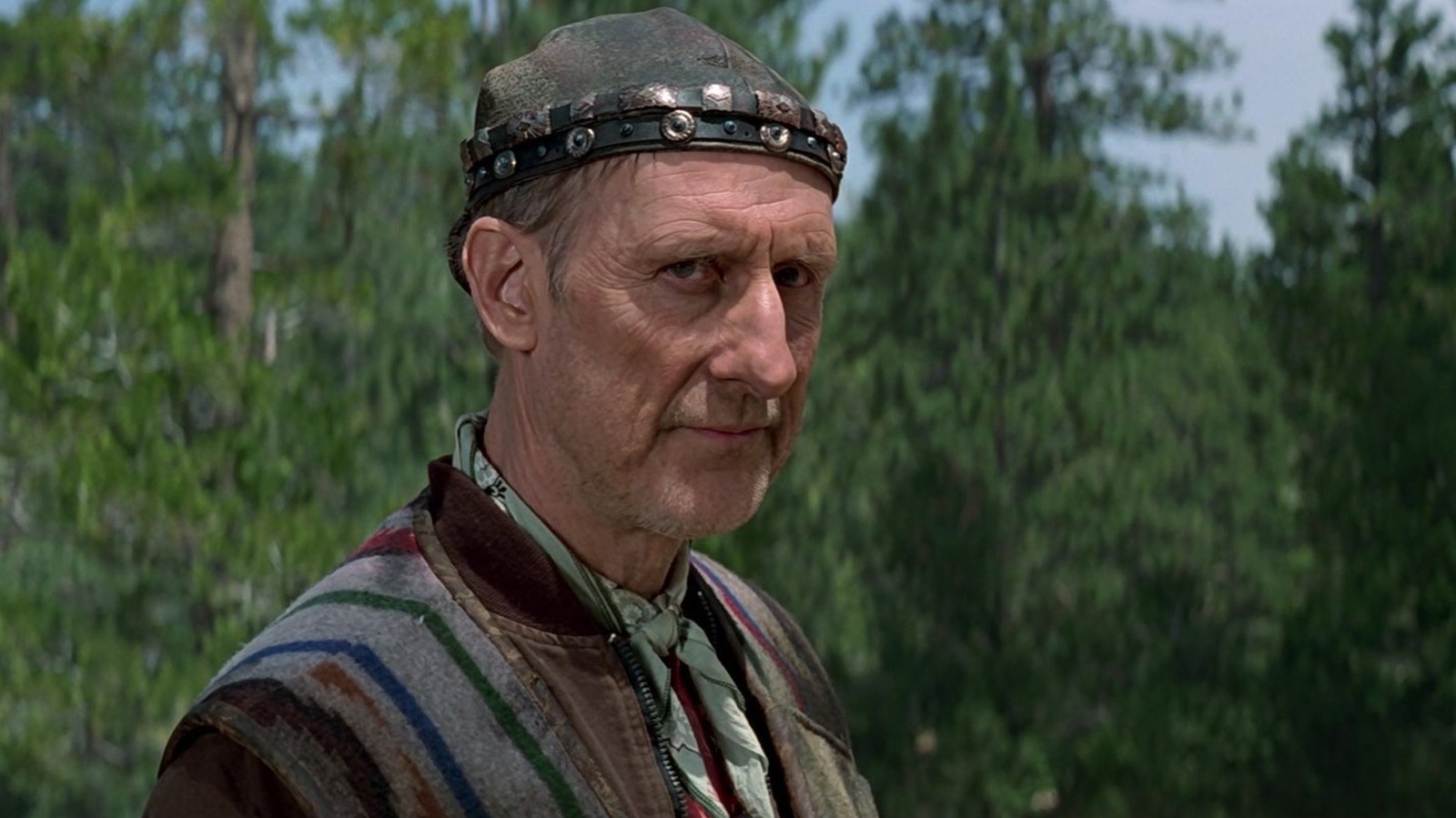
While best known for his commanding presence and Oscar-nominated role in Babe, Cromwell’s involvement in Star Trek: First Contact as Zefram Cochrane—Earth’s first warp-capable pilot and the man who makes first contact with the Vulcans—was more than a casting choice. It was the convergence of art, science, and personal belief. Cromwell didn’t just play a visionary; he identified with one, shaped by his own long-standing engagement with the question: Are we alone?
Why James Cromwell Said Yes to First Contact
Cromwell wasn’t a lifelong Star Trek fan when he was offered the role. In interviews, he admitted he hadn’t followed the franchise closely. What drew him in wasn’t nostalgia or genre appeal—it was the film’s central theme: humanity’s leap into interstellar awareness.
That theme mirrored his own intellectual journey.
By the 1990s, Cromwell had become deeply invested in scientific and philosophical questions about extraterrestrial intelligence. He studied declassified government documents, attended symposia on exobiology, and supported organizations advocating for public transparency around UFO phenomena. His interest wasn’t fringe obsession; it was methodical, rooted in a belief that the search for life beyond Earth is one of humanity’s most serious scientific endeavors.
When the script arrived—featuring a drunk, reluctant genius who inadvertently triggers first contact—Cromwell saw more than a character arc. He saw a metaphor for human evolution, skepticism, and the responsibility that comes with discovery.
“I’ve read the research,” Cromwell said in a 1997 roundtable discussion. “The statistical probability of life elsewhere is so high it’s absurd to deny it. When we finally make contact, it won't be with warships. It’ll be with curiosity. That’s what Cochrane represents.”
His scientific curiosity wasn’t performative. It was a driving force behind his acceptance of the role.
From Physics to Philosophy: The Actor’s Real-World Research
Cromwell’s extraterrestrial studies weren’t limited to pop science. He engaged with academic materials from NASA’s astrobiology program, followed the work of Carl Sagan and Jill Tarter, and cited the Drake Equation in interviews as a legitimate framework for estimating intelligent life.
He also explored the political dimensions of disclosure, supporting the idea that governments may already possess evidence of non-human aerial phenomena (a term now widely used in place of “UFO”). This belief, combined with his background in political activism, made First Contact more than a job—it was commentary.
During filming, Cromwell contributed subtle improvisations that grounded Cochrane’s skepticism. In the scene where Cochrane first sees the Vulcans, he doesn’t react with wonder—but with disbelief, fear, and a muttered, “They’re from another world?” That hesitation wasn’t in the original script. It was Cromwell channeling the very real human response he believed would follow actual first contact.
The production team noticed.

Director Jonathan Frakes later commented, “Jim brought a realism to Cochrane that could only come from someone who’d really thought about what it would mean. He wasn’t acting like he believed in aliens—he believed in them.”
The Cultural Impact of an Informed Performance
Cromwell’s performance stood out not because it was grandiose, but because it was grounded. In a franchise often defined by idealism, his Cochrane was flawed, cynical, and human. That authenticity resonated with audiences and critics alike.
More importantly, it aligned with a growing cultural shift. The 1990s saw a surge in public interest in UFOs, fueled by the Roswell anniversary, congressional hearings, and leaked documents. First Contact arrived at a moment when the line between science fiction and scientific inquiry was blurring.
Cromwell’s real-life studies gave him credibility—and the filmmakers leveraged it. Promotional interviews often highlighted his interest in extraterrestrial life, subtly positioning the film as not just entertainment, but a thoughtful exploration of a plausible future.
This wasn’t accidental. The Star Trek franchise has always mirrored contemporary scientific discourse. By casting an actor with genuine expertise and passion for the topic, the film deepened its resonance.
Behind the Scenes: Science Consultants and Actor Collaboration
First Contact didn’t rely solely on Cromwell’s knowledge. The production included scientific advisors from the SETI Institute and NASA-affiliated researchers to ensure the portrayal of warp theory, exobiology, and interspecies communication remained plausible.
But where consultants provided technical accuracy, Cromwell provided emotional truth.
In one notable pre-production meeting, he raised concerns about how Cochrane’s initial denial of the Vulcans was written. He argued that a real scientist—especially one who’d spent years dismissed as a crackpot—wouldn’t immediately accept alien visitors, even with proof.
The script was revised.
This kind of collaboration is rare in big-budget sci-fi, where actors often follow directorial cues without challenging narrative logic. Cromwell’s influence underscored a key point: when performers bring real-world expertise to a role, the result is not just better acting—it’s better storytelling.
Real-Life Extraterrestrial Studies That Influenced His View
Cromwell’s research wasn’t limited to books and briefings. Over the years, he’s cited several key areas of study that shaped his thinking—and by extension, his portrayal of Cochrane:
- The Drake Equation: He frequently referenced Frank Drake’s formula for estimating the number of active, communicative extraterrestrial civilizations. To Cromwell, the math suggested inevitability.
- The Fermi Paradox: He grappled with the contradiction between high probability of alien life and the lack of evidence. His answer? We’re looking wrong, or they’re hiding.
- Project Blue Book: He studied declassified U.S. Air Force UFO investigations, noting patterns that suggested unexplained phenomena couldn’t be dismissed as mere misidentifications.
- The Wow! Signal: This 1977 radio signal from deep space fascinated him. “One strong burst, never repeated. That’s not nothing,” he said in a 2015 podcast.
- NASA’s Exoplanet Discoveries: Even after filming, he followed Kepler mission findings, noting that thousands of Earth-like planets made alien life statistically unavoidable.
These weren’t hobbyist interests. They were part of a coherent worldview that informed how he approached Cochrane’s transformation—from alcoholic recluse to accidental pioneer.
Why This Role Still Matters in the Age of UAP Disclosure
Today, as the U.S. government acknowledges Unidentified Anomalous Phenomena (UAP) and Congress holds public hearings, Cromwell’s performance feels prophetic. His portrayal of a flawed, reluctant contact figure parallels modern concerns: What if we’re not ready? What if the discoverers are flawed? What if the truth is buried?
His casting wasn’t just serendipity. It was a quiet testament to Star Trek’s tradition of hiring thinkers, not just performers.
Other actors have played scientists or visionaries. Few have brought real scientific inquiry to the role. Cromwell didn’t just study the script—he studied the subject.
That depth elevated First Contact from space adventure to philosophical inquiry. When Cochrane asks, “Why is this happening to me?” it’s not a line—it’s a human response that Cromwell, through years of reflection, knew by heart.
Lessons for Storytellers and Scientists Alike For filmmakers, Cromwell’s case offers a powerful lesson: authenticity comes from lived experience. When casting roles involving science, technology, or existential themes, hiring actors with real-world knowledge can transform a performance.
For scientists and researchers, it’s a reminder that public engagement matters. Cromwell’s advocacy didn’t come from a lab—it came from curiosity, access to data, and a desire to understand. His journey shows how science, when communicated clearly, can inspire not just discovery, but art.
And for audiences, it’s a prompt to look deeper. The next time you watch First Contact, notice the hesitation in Cochrane’s voice. That’s not acting. That’s someone who’s spent years asking the same question—and still isn’t sure of the answer.
Final Takeaway: Cast
With Conviction
James Cromwell didn’t join Star Trek: First Contact for fame or franchise appeal. He joined because the film’s core idea—first contact—was one he’d spent years researching, debating, and believing in. His real-life extraterrestrial studies weren’t a footnote; they were the foundation of his performance.
In an era where entertainment often prioritizes spectacle over substance, Cromwell’s role stands as a model: cast not just for talent, but for truth.
If you’re creating content, leading a project, or even just choosing what to believe—ask yourself: Who brings real understanding to the table? Because sometimes, the most fictional stories are made real by those who’ve done the homework.
FAQ
Did James Cromwell believe in UFOs when he filmed First Contact? Yes. By the mid-1990s, Cromwell was already engaged with declassified UFO research and believed the phenomenon warranted serious scientific inquiry.
How did his beliefs affect his performance as Zefram Cochrane? His skepticism and realism shaped Cochrane’s hesitant, human reaction to alien contact, adding depth beyond the original script.
Was he involved in any UFO research organizations? While not a formal member of groups like SETI, Cromwell supported transparency efforts and cited their research frequently in interviews.
Has he spoken about extraterrestrial life since the film? Yes. He continues to discuss UFOs and government disclosure in media appearances, calling for open scientific investigation.
Did the Star Trek production team know about his interests before casting? They were aware of his activism but not his depth of UFO research. His insights emerged during rehearsals and script discussions.
Is there evidence that his input changed the script? Yes. The scene where Cochrane reacts to seeing the Vulcans was rewritten to reflect greater skepticism, based on Cromwell’s suggestions.
Does he still support the search for extraterrestrial intelligence? Absolutely. He remains vocal about NASA’s exoplanet missions and advocates for public access to UFO-related government data.
FAQ
What should you look for in How a Star Trek Actor’s UFO Research Shaped First Contact? Focus on relevance, practical value, and how well the solution matches real user intent.
Is How a Star Trek Actor’s UFO Research Shaped First Contact suitable for beginners? That depends on the workflow, but a clear step-by-step approach usually makes it easier to start.
How do you compare options around How a Star Trek Actor’s UFO Research Shaped First Contact? Compare features, trust signals, limitations, pricing, and ease of implementation.
What mistakes should you avoid? Avoid generic choices, weak validation, and decisions based only on marketing claims.
What is the next best step? Shortlist the most relevant options, validate them quickly, and refine from real-world results.