
Few quotes blend absurdity, emotional truth, and cultural observation as seamlessly as Jack Whitehall’s now-iconic line: “I’m sure wherever my dad is, he’s looking down on us. He’s not dead—he’s just very far away.”
At first listen, it’s a classic setup-and-punchline structure—soaring on the wings of British deadpan delivery. But peel back the comedic layer, and you uncover a sharp commentary on honesty, modern work culture, and the contradictions inherent in human behavior. This isn’t just a throwaway joke. It’s a quote of the day with lasting resonance, precisely because it mirrors how we perform, deflect, and reframe reality in daily life.
Whitehall, known for his self-deprecating wit and comedic chemistry with his father, Michael, uses humor not to escape truth—but to deliver it with a smirk. This quote, pulled from one of his stand-up specials or father-son travel documentaries, functions as both satire and social mirror. Let’s dissect why it sticks, what it reveals, and how its lessons apply far beyond comedy.
The Genius of Misdirection: Why
This Quote Works
On the surface, the joke relies on a familiar trope—the idea that deceased loved ones “look down” from heaven. Whitehall subverts it instantly: his father isn’t dead, just emotionally or physically distant. The humor lies in the near-miss of sincerity. It’s almost reverent—until it isn’t.
But beneath the punchline is a masterstroke in observational comedy. The quote captures a universal truth: we often use emotional language to mask uncomfortable realities. Saying “he’s just very far away” instead of “we don’t talk much” or “our relationship is strained” is a linguistic cushion, a polite fiction.
In work culture, this kind of softening is routine. We say “let’s circle back” instead of “I’m ignoring this.” We claim “I’m swamped” rather than “I’m procrastinating.” Whitehall’s joke exposes how language is often deployed not to clarify, but to obfuscate with charm.
Real-world example: In corporate settings, managers might say, “We’re optimizing our team structure” when they mean “We’re laying people off.” The euphemism eases discomfort, but at the cost of honesty.
Whitehall’s quote doesn’t just mock the practice—it embodies it. And by doing so, it holds up a mirror.
Honesty as a Comedic Weapon
Jack Whitehall doesn’t position himself as a moralist. Yet his comedy is rooted in confession. He jokes about privilege, insecurity, and strained family dynamics with a level of transparency that feels almost therapeutic.
In the case of the “looking down” quote, the honesty isn’t in the literal truth—it’s in the emotional truth. Yes, his father is alive. But in terms of emotional presence? That’s another matter. The joke lands because it rings true for anyone who’s had a distant parent, an absent mentor, or even a disengaged manager.
This approach reflects a broader trend in modern comedy: the blurring of stand-up and confession. Comedians like Hannah Gadsby, John Mulaney, and Phoebe Robinson use humor as a vehicle for vulnerability. Whitehall does the same—just wrapped in a tuxedo of upper-class British irony.
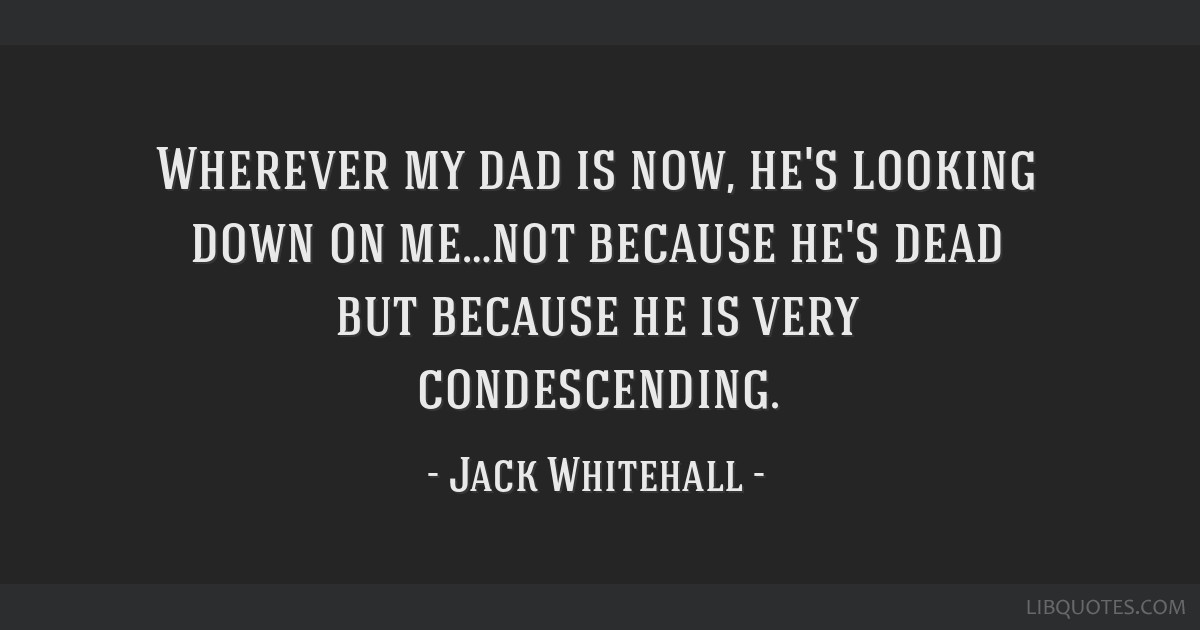
Where others deflect, Whitehall deflects while admitting he’s deflecting. That self-awareness is what makes the quote more than a one-liner. It’s a layered commentary on how we avoid directness—even with ourselves.
For professionals, this is a reminder: clarity is courage. When we say what we mean—instead of dressing it up in corporate jargon or comedic deflection—we build trust. In comedy, it earns laughs. In leadership, it earns loyalty.
Work Culture Through a Comedic Lens
Whitehall’s dynamic with his father—particularly in shows like Jack Whitehall: Travels with My Father—offers a case study in intergenerational work ethics and communication styles.
Michael Whitehall represents a traditional, emotionally reserved British upbringing: stiff upper lip, minimal praise, achievement through silence. Jack, meanwhile, is expressive, image-conscious, and emotionally verbose. Their clashes aren’t just familial—they’re cultural.
This tension mirrors modern workplace dynamics:
- The Baby Boomer manager who values “grind” over work-life balance.
- The Millennial employee who prioritizes mental health and transparency.
- The Gen Z worker redefining professionalism altogether.
Whitehall’s quote—“he’s not dead, just very far away”—could easily describe the emotional gap between these generations in the workplace. One side waits for praise that never comes. The other doesn’t know how to give it.
Use case: A young creative submits a campaign idea. The senior partner says nothing. Days pass. No feedback. Eventually, the younger employee learns it was “approved by silence.” This isn’t leadership—it’s emotional distance disguised as tradition.
Whitehall’s humor highlights how outdated communication norms erode team cohesion. The solution isn’t more jokes—but more honest dialogue, even when it’s awkward.
Human Nature and the Art of Deflection
Why do we deflect? Psychology offers answers: fear of conflict, desire for approval, cultural conditioning.
Whitehall’s joke is a textbook example of deflection via humor. Instead of saying, “My dad and I don’t talk much,” he packages it in a punchline. The audience laughs, tension dissipates, and the real issue remains unaddressed.
But here’s the twist: by making the deflection the joke itself, he neutralizes its power. He’s saying, “Yes, I’m avoiding the truth—and isn’t that ridiculous?”
This self-awareness is rare. Most of us deflect without realizing it. We say:
- “I’m fine” when we’re not.
- “No worries” when we’re actually furious.
- “Let’s keep in touch” when we know we won’t.
These micro-deflections shape workplace culture. Over time, they create environments where real issues fester beneath a veneer of politeness.
Practical takeaway: Build check-ins into team routines that demand specificity. Replace “How are you?” with “What’s one challenge you’re facing this week?” The goal isn’t to eliminate humor—it’s to ensure it doesn’t become a shield.
Comedy as Cultural Diagnosis
Great comedians are often society’s most accurate sociologists. They spot patterns the rest of us live inside but can’t see.
Whitehall’s work—especially his exploration of father-son dynamics—diagnoses a broader British (and increasingly global) issue: the failure to communicate emotional needs.
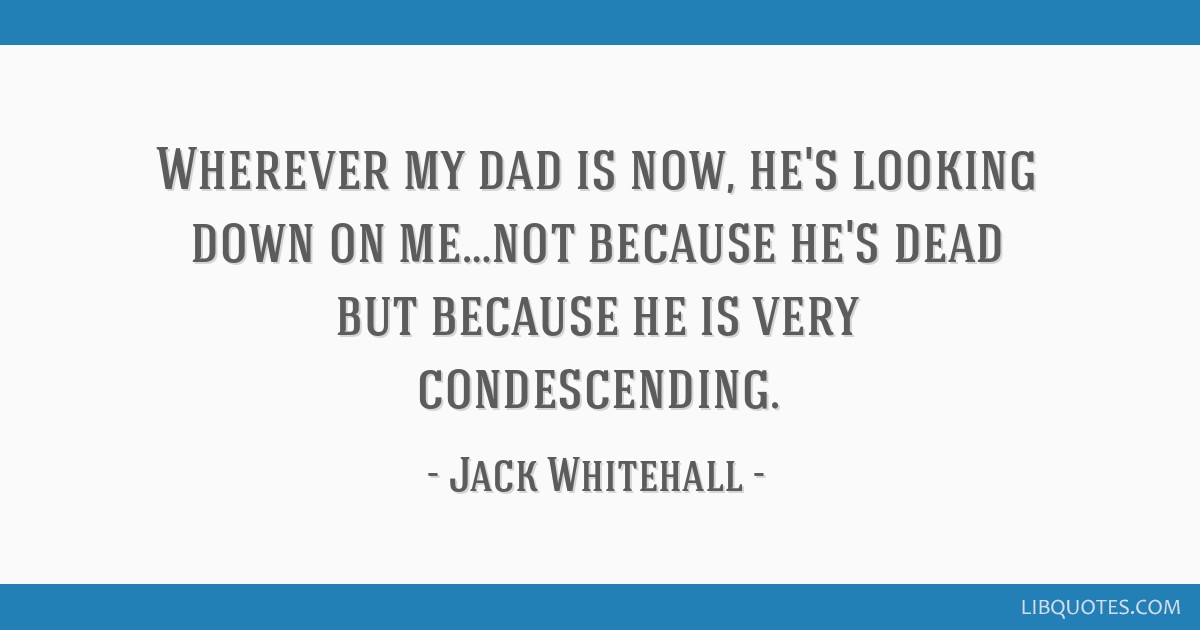
In one travel episode, Jack tries to get his father to say “I’m proud of you.” It never happens. The moment is funny because it’s painfully real. Millions recognize that ache—the desire for validation from someone emotionally unequipped to give it.
Now, scale that to the workplace.
How many employees wait for a “great job” from a manager who believes praise is unnecessary? How many leaders avoid difficult conversations because they were never modeled growing up?
The “looking down” quote, in this context, becomes a metaphor for leadership presence. You can be physically in the office but emotionally “very far away.” And in human-centered work, that distance matters more than proximity.
Applying the Lesson: From Laughter to Action
So what do we do with this quote beyond quoting it on social media?
Use it as a prompt—for self-audit and cultural change.
Ask yourself:
- Where am I using humor to avoid hard truths?
- In my team, are people “present” or just “very far away”?
- Do we have permission to speak directly, or are we trapped in polite euphemisms?
Workflow tip: In your next meeting, ban vague language. No “touch base,” “drill down,” or “take offline.” Say what you mean. If it feels awkward, that’s the point.
Honesty isn’t always comfortable. But as Whitehall’s comedy proves, it’s the foundation of connection—whether with a parent, a colleague, or an audience.
Final Thought: The Deeper Punchline
Jack Whitehall’s “I’m sure wherever my dad is…” quote endures not because it’s shocking or profound in the traditional sense. It endures because it’s recognition. We’ve all used humor to dance around truth. We’ve all felt the ache of emotional distance. We’ve all worked in environments where silence speaks louder than words.
The real lesson isn’t in the joke—it’s in what the joke reveals. Honesty, even when wrapped in absurdity, cuts through the noise. And in a world of performative positivity and corporate double-speak, that kind of clarity is revolutionary.
So the next time you hear the quote, don’t just laugh. Pause. Ask: where am I “very far away” from the truth?
Then close the distance.
FAQ
What is Jack Whitehall’s quote about his dad? The quote is: “I’m sure wherever my dad is, he’s looking down on us. He’s not dead—he’s just very far away.” It blends humor with emotional truth about family distance.
Where did Jack Whitehall say this quote? It originated in his stand-up routines and was popularized in Jack Whitehall: Travels with My Father, a Netflix series documenting his trips with his father, Michael.
Is Jack Whitehall’s dad actually alive? Yes, Michael Whitehall is alive. The joke hinges on the contrast between literal truth and emotional distance.
What is the deeper meaning of the quote? It critiques how people use humor and euphemisms to avoid discussing emotional truths—especially in relationships and workplace dynamics.
How does this quote relate to work culture? It mirrors how professionals use vague language to avoid conflict or difficult conversations, leading to miscommunication and disconnection.
Why is Jack Whitehall’s comedy effective for social commentary? He combines self-deprecation with sharp observation, exposing cultural norms—especially around masculinity, class, and communication.
Can humor improve workplace honesty? Yes, when used intentionally. But when it becomes a deflection tool, it hinders authentic communication. The key is balance.
FAQ
What should you look for in Jack Whitehall’s Quote of the Day: A Masterclass in Humor and Truth? Focus on relevance, practical value, and how well the solution matches real user intent.
Is Jack Whitehall’s Quote of the Day: A Masterclass in Humor and Truth suitable for beginners? That depends on the workflow, but a clear step-by-step approach usually makes it easier to start.
How do you compare options around Jack Whitehall’s Quote of the Day: A Masterclass in Humor and Truth? Compare features, trust signals, limitations, pricing, and ease of implementation.
What mistakes should you avoid? Avoid generic choices, weak validation, and decisions based only on marketing claims.
What is the next best step? Shortlist the most relevant options, validate them quickly, and refine from real-world results.