Nedra Talley Ross, the radiant voice and dynamic stage presence behind one of the most influential girl groups in American music history, has died at the age of 80. As a founding member of the Ronettes, she helped shape the sound of early 1960s pop with hits like “Be My Baby,” “Baby, I Love You,” and “Walking in the Rain.” Her passing marks the end of an era—not just for the group, but for a generation of artists who redefined rhythm, style, and emotional intensity in popular song.
Talley Ross wasn’t just a background presence. She was integral to the Ronettes’ signature harmonies, balancing Ronnie Spector’s lead with warmth, precision, and soul. Her contributions extended beyond singing—she was a key architect of the group’s image and energy, part of a trio that brought glamour, attitude, and authenticity to a male-dominated industry.
The Rise of the Ronettes and Nedra’s Role
Formed in the late 1950s in Harlem, New York, the Ronettes began as a family act—originally called the Darling Sisters—featuring Ronnie Bennett (later Ronnie Spector), her sister Estelle Bennett, and their cousin Nedra Talley. They started performing locally, drawing attention with their bold looks: beehive hairdos, heavy eyeliner, and tight skirts. But it wasn’t just their image that turned heads—it was their sound.
Signed to Phil Spector’s Philles Records in 1963, the Ronettes became central figures in Spector’s “Wall of Sound” production style. The dense, orchestral arrangements—layered drums, strings, and echo—created a sonic depth that made their records feel cinematic. Nedra’s voice, slightly lower and richer than Ronnie’s, anchored the harmonies. She often sang the middle or lower parts, giving the trio’s blend a fullness that set them apart from other girl groups.
On “Be My Baby,” one of the most iconic pop singles of all time, Nedra’s backing vocals swell behind Ronnie’s plea: “Oh oh oh, I’ll never let you go.” That track, released in 1963, didn’t just top charts—it influenced generations of musicians, from Brian Wilson to Bruce Springsteen.
Nedra’s stage presence matched her vocal strength. She moved with confidence, never overshadowing Ronnie but always holding her own. In performances, the trio moved like a unit—choreographed but spontaneous, disciplined but alive. Their 1964 appearance on The Ed Sullivan Show remains a masterclass in group dynamics: synchronized gestures, matching dresses, and a magnetic connection to the audience.
Beyond the Hits: Challenges and Creative Constraints
Despite their success, the Ronettes’ time in the spotlight was brief. Between 1963 and 1966, they released only one full studio album, Presenting the Ronettes. Their catalog was limited not by lack of talent, but by the restrictive control exerted by Phil Spector.
Spector, though a visionary producer, was notoriously possessive and difficult. He tightly managed the group’s image, sound, and schedule. Touring was sporadic, and creative input from the members was minimal. Nedra, like the others, had little say in song selection or arrangements.
After the group disbanded in 1967, Nedra stepped away from the mainstream music industry. While Ronnie Spector launched a solo career and Estelle struggled with health and personal issues, Nedra took a different path—one defined by personal growth, family, and faith.
A Life Beyond the Spotlight

Unlike many of her contemporaries, Nedra Talley Ross chose a life of relative privacy after the Ronettes. She married her high school sweetheart, Scott Ross, in 1967—a man who would become a minister—and gradually distanced herself from the entertainment world.
She converted to Christianity and raised four children, grounding her life in faith and family. For decades, she rarely gave interviews or performed, focusing instead on spiritual work and community. Yet she never fully retreated from music.
In the 1980s, she began performing again, sometimes with Ronnie Spector, and participated in oldies revivals and tribute concerts. She also contributed to documentaries and archival projects, helping preserve the Ronettes’ legacy. Her insights were valued not just for their historical weight, but for their clarity and honesty.
In interviews, she spoke openly about the challenges of being a Black woman in a predominantly white pop landscape, the pressures of fame, and the emotional toll of working under Spector. She acknowledged the magic of their music but didn’t romanticize the era.
“We were young, and we didn’t know how to navigate the business,” she once said. “We just knew we loved to sing.”
The Cultural Legacy of the Ronettes
The Ronettes didn’t just make hit records—they helped redefine what female artists could be in popular music. Before them, girl groups were often seen as disposable, sweet-voiced acts with little agency. The Ronettes changed that.
They were tough, glamorous, and emotionally raw. Their music dealt with longing, heartbreak, and desire in a way that felt real—never cutesy or sanitized. Songs like “(The Best Part of) Breakin’ Up” and “Do I Love You?” carried a complexity that resonated with teenage audiences and adult listeners alike.
Nedra Talley Ross was essential to that authenticity. She wasn’t just singing harmonies—she was embodying the emotion. When the group sang about love and loss, she felt it. That sincerity translated through the speakers and into the culture.
Their influence is everywhere. The E Street Band’s use of dramatic builds and female backing vocals owes a debt to the Ronettes. The Go-Go’s, the Bangles, and modern acts like Haim have cited them as inspirations. Even fashion designers have drawn from their look—vintage photos of the trio regularly appear in style retrospectives.
Induction into the Rock and Roll Hall of Fame For decades, the Ronettes’ absence from the Rock and Roll Hall of Fame was a glaring oversight. Fans, critics, and fellow musicians campaigned for their inclusion. Finally, in 2007, they were inducted—nearly 45 years after their peak.
Nedra Talley Ross, Ronnie Spector, and the late Estelle Bennett were honored together. In her induction speech, Nedra spoke with humility and pride.
“We didn’t set out to change music,” she said. “We just wanted to sing. But if our voices helped someone feel seen, then we did something right.”
The induction was bittersweet. By then, Estelle had passed away (in 2009), and Ronnie Spector’s health was declining (she died in 2022). Nedra stood as one of the last living links to the group’s original spirit.
Nedra’s Later Years and Enduring Voice
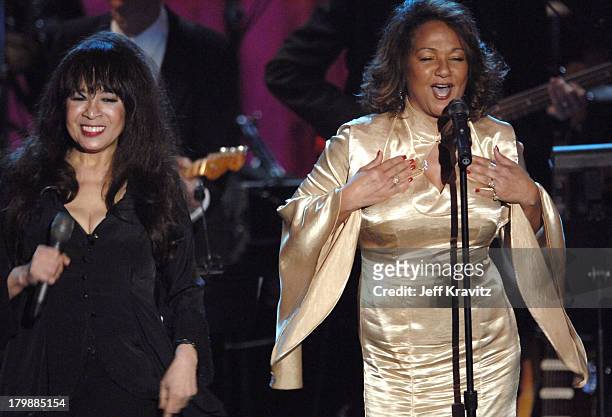
Even in retirement, Nedra remained a quiet but steady presence in music history. She participated in interviews, contributed to reissues, and occasionally performed at tribute events. In 2019, she released a spoken-word album reflecting on her life and faith, showing that her voice—narrative and spiritual—was still evolving.
She also became an advocate for artists’ rights, speaking about the need for fair compensation and recognition, especially for women and people of color in the music industry. Her experience under Spector’s control gave her a unique perspective on exploitation and resilience.
Fans who met her often remarked on her warmth and grace. She didn’t carry the bitterness that sometimes follows early fame and abrupt decline. Instead, she expressed gratitude—for her family, her faith, and the chance to have been part of something lasting.
The Enduring Power of a Backing Vocal
One of the quiet tragedies of music history is that backing singers are often forgotten. Their voices are essential, yet their names fade. Nedra Talley Ross defied that pattern—not because she stepped into the spotlight, but because she never let her role be diminished.
She understood that harmony isn’t about being heard the loudest—it’s about being felt. Her voice, woven into the fabric of the Ronettes’ sound, gave their music its depth and soul. When you hear “Be My Baby,” you’re hearing Nedra just as much as Ronnie.
Modern listeners might not know her name, but they feel her presence. That’s the mark of a true artist.
A Legacy That Lives On
Nedra Talley Ross’s death at 80 closes a chapter in American music. But her influence endures—in every pop song that builds to a crescendo, in every girl group that sings with conviction, in every woman who picks up a microphone and refuses to be background.
She wasn’t just a member of the Ronettes. She was part of the foundation.
For fans, the loss is personal. For historians, it’s a moment to reflect. And for aspiring artists, it’s a reminder: greatness isn’t always about the lead vocal. Sometimes, it’s the voice that holds everything together.
If you’ve ever been moved by a Ronettes record, you’ve been touched by Nedra Talley Ross. And in that way, she’ll never be gone.
FAQ
Was Nedra Talley Ross related to Ronnie Spector? Yes, Nedra was the first cousin of Ronnie Spector (born Veronica Bennett). The Ronettes were originally a family group, including Ronnie, her sister Estelle, and Nedra.
Did Nedra Talley Ross have a solo career? No, she did not pursue a traditional solo music career. After the Ronettes, she focused on family and faith, though she occasionally performed and released spoken-word work.
Why didn’t the Ronettes release more albums? The group was limited by Phil Spector’s control over their output and the shifting music landscape of the mid-1960s. They released only one studio album during their original run.
Was Nedra Talley Ross in the Rock and Roll Hall of Fame? Yes, she was inducted in 2007 as a member of the Ronettes.
Did Nedra Talley Ross continue performing after the Ronettes? She performed occasionally at revivals, tribute shows, and with Ronnie Spector, but largely stepped away from the spotlight to focus on her family and spiritual life.
What was Nedra Talley Ross’s cause of death? As of this writing, no official cause of death has been publicly confirmed.
How did Nedra Talley Ross influence modern music? Through her vocal harmonies and stage presence, she helped shape the sound and image of girl groups, influencing artists across pop, rock, and R&B.
FAQ
What should you look for in Ronettes Singer Nedra Talley Ross Dead at 80? Focus on relevance, practical value, and how well the solution matches real user intent.
Is Ronettes Singer Nedra Talley Ross Dead at 80 suitable for beginners? That depends on the workflow, but a clear step-by-step approach usually makes it easier to start.
How do you compare options around Ronettes Singer Nedra Talley Ross Dead at 80? Compare features, trust signals, limitations, pricing, and ease of implementation.
What mistakes should you avoid? Avoid generic choices, weak validation, and decisions based only on marketing claims.
What is the next best step? Shortlist the most relevant options, validate them quickly, and refine from real-world results.